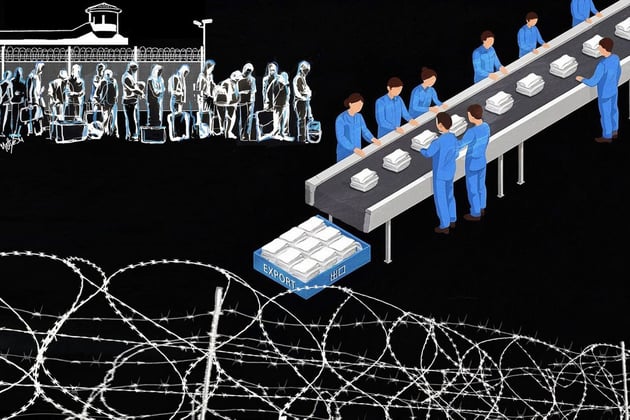
Weak Import Laws Keep Uyghur Forced Labor Profitable, Researcher Says
Australia and Japan imported more than $11 billion in goods from Chinese industries linked to forced-labor risks in 2024, according to a new report.
 Published:
Key points
- US blocks Uyghur labor goods
- Australia and Japan import them
- China shifts supply chains
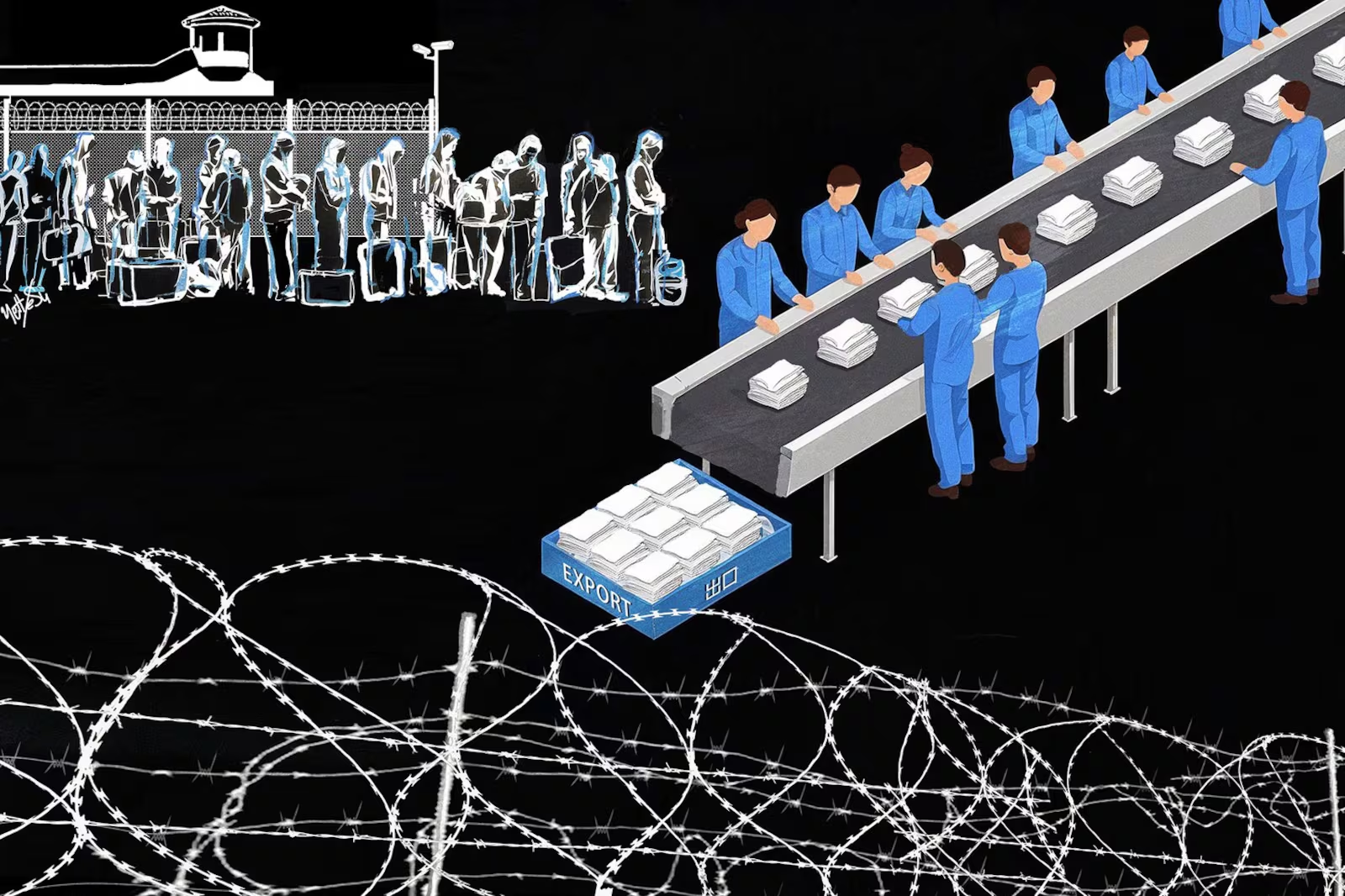
WASHINGTON (UNN) — Weak import laws in Australia and Japan allow China to continue profiting from Uyghur forced labor despite U.S. restrictions, according to a researcher who warns of gaps in enforcement.
Elijah Pockell-Wilson, a researcher at the Uyghur Human Rights Project (UHRP), said both countries continue to import billions of dollars in goods from Chinese industries associated with forced-labor risks.
"Weaker enforcement in mid-sized economies like Australia and Japan won't change behavior in East Turkistan," he said. "These markets let high-risk goods linked to forced labor stay economically viable."
The United States enacted the Uyghur Forced Labor Prevention Act (UFLPA) in December 2021, and its main import restrictions took effect in June 2022. The law presumes that goods produced wholly or partly in East Turkistan, which China officially calls Xinjiang, or by certain listed entities, were made with forced labor. Importers must provide clear and convincing evidence to overcome that presumption.
The European Union adopted its Forced Labour Regulation in 2024, with enforcement scheduled to begin in December 2027.
Australia and Japan, however, have no comparable import ban. Pockell-Wilson said this creates opportunities for goods associated with forced-labor risks to enter markets where companies face fewer restrictions.
His report, Redirected Risk: Uyghur Forced Labor and the Enforcement Gap in Australia and Japan, published June 23, examines how differences in import regulations affect trade with China.
Using United Nations trade data from 2024, the report estimates that Australia imported approximately $4.82 billion in goods from Chinese industries associated with elevated forced-labor risks. Japan imported about $6.71 billion.
Together, the two countries bought more than $11.5 billion in goods from the identified high-risk sectors.
The report does not claim that all these products were made with forced labor. Instead, it measures imports from industries where forced-labor risks are documented and independent verification remains difficult.
Cotton clothing and textiles accounted for the largest share, followed by solar-related products, aluminum and industrial chemicals.
East Turkistan produces about one-fifth of the world's cotton and roughly 90 percent of China's cotton, according to estimates cited in the report. The material can enter international supply chains as raw cotton, yarn, fabric or clothing manufactured in other countries, making its origin difficult to trace.
The report also examines aluminum imports. After U.S. enforcement of the UFLPA began, American imports of Chinese aluminum declined sharply. Imports to Australia and Japan fell temporarily in 2023 but subsequently recovered to levels broadly consistent with those seen before enforcement began.
Pockell-Wilson said the figures point to a division in global supply chains, with companies able to separate goods intended for tightly regulated markets from products sold in countries with weaker enforcement.
He also pointed to U.S. Customs and Border Protection (CBP) data showing that shipments subject to UFLPA enforcement arrive from countries other than China.
"Since the UFLPA passed in 2022, CBP has documented supply-chain bifurcation through third countries like Malaysia, Vietnam, and Thailand," he said.
Pockell-Wilson said the agency's enforcement figures suggest that companies are adjusting their supply chains to meet U.S. import requirements while continuing to serve markets with fewer restrictions.
The customs figures alone do not establish that goods rejected by the United States were redirected to Australia or Japan. The report identifies a risk of such diversion based on trade patterns and differences in national enforcement.
Other investigations have documented how products linked to East Turkistan can become difficult to identify after processing in third countries.
Research led by Laura Murphy at Sheffield Hallam University traced cotton supply chains connecting the region to manufacturers supplying more than 100 international brands.
The risks extend beyond international trade. Since 2017, Chinese authorities have detained more than one million Uyghurs and other Turkic peoples in a network of camps, detention facilities and prisons, according to estimates cited by rights organizations.
Researchers have also documented state-organized labor transfers that send Uyghurs to factories and agricultural operations under conditions involving surveillance, political pressure and restrictions on freedom of movement.
China denies allegations of forced labor and describes its labor programs as efforts to provide employment, reduce poverty and combat extremism.
Pockell-Wilson said restrictions on independent investigations and the inability of workers to speak freely make conventional factory audits unreliable in the region.
"The problem isn't just that forced-labor goods might keep entering foreign markets," he said. "It's that weak enforcement helps keep a coercive system profitable."
He described forced labor in East Turkistan as part of a broader system of state control.
"In East Turkistan, forced labor is tied to the state's power to 'surveil, transfer, discipline, and control Uyghurs and other Turkic peoples while feeding that coercion into industrial supply chains,'" he said.
Pockell-Wilson argued that enforcement limited to the United States and European Union would not sufficiently change China's economic incentives.
"More enforcement in major economies like the U.S. and E.U. won't stop China from using Uyghur forced labor to make major export goods," he said.
He said governments needed to coordinate import restrictions and make access to international markets dependent on evidence that products were not manufactured using forced labor.
"The only viable way forward is to make Uyghur forced labor less economically useful to China," he said.
Australia's Modern Slavery Act requires large companies to report risks of forced labor and other forms of modern slavery in their operations and supply chains. It does not prohibit the import of goods linked to those practices.
In July 2026, the Australian government announced plans to introduce civil penalties for failures to meet reporting requirements and proposed a criminal offense for companies that fail to prevent modern slavery.
Those proposed reforms do not establish a UFLPA-style import prohibition.
Japan relies largely on nonbinding human rights guidelines that encourage companies to examine their supply chains but do not give customs authorities comparable powers to stop high-risk imports.
Pockell-Wilson's report recommends that both countries adopt forced-labor import bans, mandatory supply-chain traceability requirements and stronger customs enforcement. It also calls for closer coordination with the United States and European Union to prevent goods linked to forced labor from moving into markets with weaker protections.