
U.S.-China Rare Earth Trade Framework Leaves Uyghur Forced Labor Concerns Unaddressed
Investigations identify forced labor risks in China's critical mineral supply chains and factories supplying major international brands.

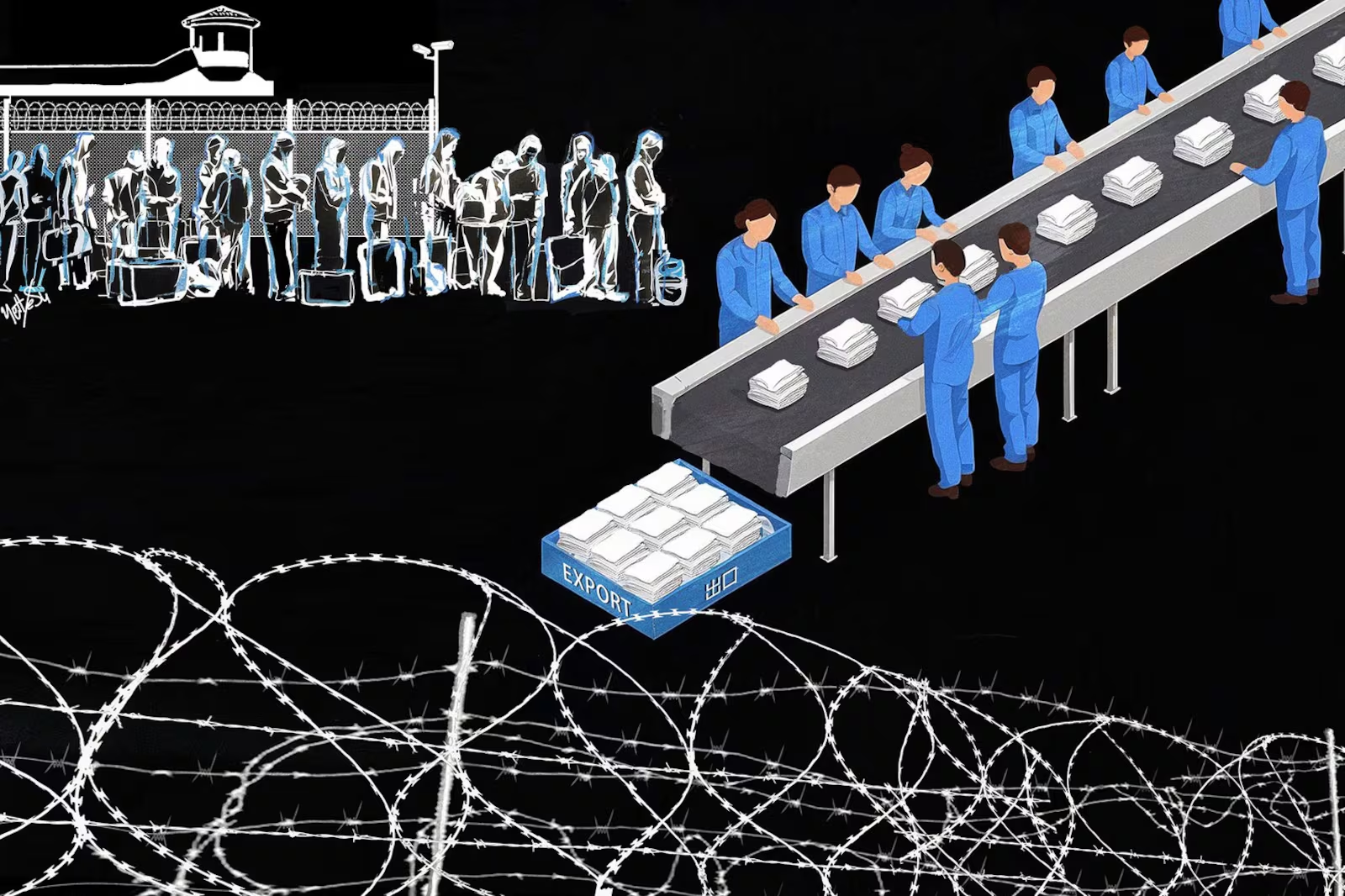
A U.S.-China trade framework announced on June 11, 2025, to restore Chinese rare earth exports did not address forced labor risks in China's mineral supply chains, despite new findings linking producers of critical minerals to state-sponsored labor programs involving Uyghurs and other ethnic minorities.
The announcement followed two days of negotiations in London, where American and Chinese officials sought to ease trade tensions that had disrupted supplies of rare earth minerals and magnets used in the automotive, electronics and defense industries.
President Donald Trump said China had agreed to resume supplies of rare earth minerals and magnets, while Washington would continue allowing Chinese students to attend American universities.
Trump also announced that U.S. tariffs on Chinese imports would total 55%, compared with 10% on American goods entering China. The U.S. figure included existing duties rather than an entirely new tariff rate.
The arrangement remained subject to final approval by Trump and Chinese President Xi Jinping, with several terms yet to be made public.
The announcement came one day after The Hague-based human rights organization Global Rights Compliance (GRC) released a report identifying 77 companies operating in Xinjiang as being at risk of involvement in state-imposed forced labor programs.
The June 10 report, Risk at the Source: Critical Mineral Supply Chains and State-Imposed Forced Labour in the Uyghur Region, examined the production and processing of lithium, titanium, beryllium and magnesium. These materials are used in batteries, aerospace manufacturing, defense equipment and other industries.
GRC found that major mining and processing companies involved in these industries participated in government-organized labor transfer programs that researchers and legal experts have identified as forms of forced labor.
The investigation also identified 15 companies that had sourced materials directly from Xinjiang-based entities during the preceding two years and 68 downstream customers connected to Chinese suppliers with operations in the region.
The report found that Xinjiang accounted for approximately 11.6% of global titanium sponge production and more than half of China's domestic beryllium supply.
These findings raise potential compliance concerns for companies purchasing critical minerals and manufactured components from Chinese suppliers.
Although the report examined critical minerals, it did not establish that the rare earth exports covered by the London trade framework originated from the companies it identified.
A separate investigation published on May 29 by the Bureau of Investigative Journalism (TBIJ), in collaboration with The New York Times and Der Spiegel, found evidence that government-organized transfers of Uyghur and other ethnic minority workers from Xinjiang extended to factories across China.
The investigation analyzed tens of thousands of videos posted on Douyin, China's version of TikTok, and cross-checked them against government documents, state media reports and company records.
Journalists identified workers from Xinjiang at 75 factories across 11 regions of China. Those factories were linked to supply chains serving more than 100 international brands, including Apple, Samsung, Tesla and Volkswagen.
In one video examined by the investigators, a worker fed car parts into a machine while a traditional Uyghur song played in the background. The factory supplied components to Tesla.
Another video showed a worker at a plastics factory wearing industrial work clothes and a hard hat. Its caption read: “Everyone’s slave is his own master.” The factory had supplied Chinese appliance manufacturer Midea.
At a separate electronics factory supplying parts for Samsung laptops, investigators identified a worker wearing a jacket bearing the name of a local government department involved in organizing labor transfers from Xinjiang.
The journalists found that workers had been transported from Xinjiang to factories thousands of miles away under government-organized employment programs. Interviews, official records and videos indicated that some workers faced restrictions on their movements and government supervision.
The investigation also documented exports from factories employing transferred workers to markets around the world, including the United States and Europe.
Researchers and human rights organizations have argued that such labor transfers cannot be considered voluntary when workers face pressure from authorities and the possibility of punishment for refusing assignments.
China has defended its employment and labor transfer programs as measures to reduce poverty and provide vocational opportunities. Beijing has consistently rejected allegations that it imposes forced labor on Uyghurs and other ethnic minorities.
The findings present potential challenges for U.S. companies seeking to comply with the Uyghur Forced Labor Prevention Act (UFLPA), which took effect in June 2022.
The law establishes a rebuttable presumption that goods produced wholly or partly in Xinjiang, or by entities covered under its provisions, are made with forced labor and therefore prohibited from entering the United States unless importers meet strict legal requirements.
According to TBIJ, Apple and Samsung said their suppliers underwent independent audits, which had not identified forced labor. Apple also said it was investigating the reported links. Volkswagen said it was examining the allegations, while Skechers and KFC did not respond to the investigators' inquiries.
The two investigations cover different parts of China's industrial economy. GRC focused on critical mineral production and associated supply chains, while TBIJ documented labor transfers into manufacturing facilities across the country.
Together, they demonstrate the difficulties international companies face in tracing the origins of materials and components purchased from Chinese suppliers.
The London trade framework was primarily intended to restore access to minerals and reduce immediate economic tensions between Washington and Beijing. Its publicly announced terms did not include new measures to identify or prevent forced labor in the affected supply chains.
For American importers, however, the obligations imposed by the UFLPA remain separate from trade negotiations. The framework did not remove the existing legal restrictions on imports associated with forced labor in Xinjiang.