U.S. Energy Research Linked to Chinese Military, Congress Finds
U.S. Congressional Investigation Finds Energy Department Research Ties to Chinese Military Institutions
 Published:
WASHINGTON (UNN)—A congressional investigation found that thousands of scientific papers supported by the U.S. Department of Energy involved Chinese research institutions, including some linked to Beijing's military and nuclear weapons programs.
The report, released Wednesday by the House Select Committee on China and the House Permanent Select Committee on Intelligence, identified roughly 4,350 research papers published between June 2023 and June 2025 that involved Chinese collaborators and acknowledged Energy Department funding or research support. About 2,200 involved institutions affiliated with China's defense research and industrial base, according to investigators.
Among the cases cited was a 2023 paper on electronic conductivity co-authored by researchers at Oak Ridge National Laboratory, the University of Tennessee and China Electronics Technology Group Corporation (CETC), a Chinese state-owned defense company. CETC had previously been identified by the U.S. government as a Chinese military company.
The investigation also identified research partnerships involving China's Seven Sons of National Defense universities and the Chinese Academy of Engineering Physics, the country's principal nuclear weapons research institution.
The Department of Energy oversees 17 national laboratories and funds research in nuclear science, advanced materials, computing and energy technology. Some of these fields have civilian uses as well as potential military applications.
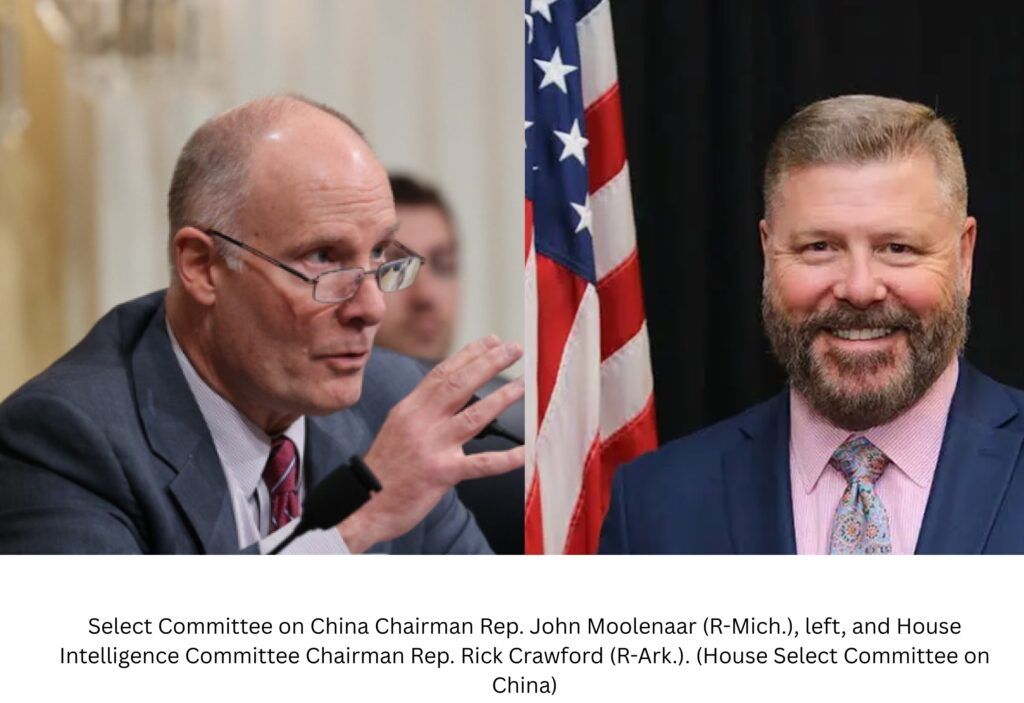
House Select Committee on China Chairman John Moolenaar, a Michigan Republican, accused the department of failing to protect taxpayer-funded research.
“The department, which oversees critical research and technological innovation, allowed research collaborations that were exploited by China,” Moolenaar said.
The lawmakers argued that weaknesses in the department's oversight allowed federally supported researchers to work with Chinese institutions involved in military development. The report identified research in areas including advanced materials, high-strength alloys, artificial intelligence and explosion science.
The investigation examined published research and institutional affiliations. Its findings raise concerns about the potential military use of scientific knowledge, although the publication figures alone do not establish that classified information was transferred or that every collaboration directly supported Chinese weapons development.
House Intelligence Committee Chairman Rick Crawford, an Arkansas Republican, accused China of using international academic partnerships to obtain sensitive technology.
“For decades, the Chinese Communist Party (CCP) has conducted intellectual property theft, cyber espionage, and illicit technology transfers under the guise of international research collaboration,” Crawford said.
The report follows earlier congressional scrutiny of universities and federally funded research partnerships involving Chinese institutions. Lawmakers had previously questioned Harvard University over alleged ties to Chinese military-linked institutions and the Xinjiang Production and Construction Corps, a U.S.-sanctioned organization implicated in human rights abuses against Uyghurs.
The two House committees called for stronger screening of foreign research partners, better information-sharing among federal agencies and tighter restrictions on taxpayer funding for projects involving institutions connected to foreign military programs.
The Department of Energy said it would review the investigation's findings and reaffirmed its commitment to research security and oversight.
The Chinese Embassy in Washington rejected the congressional report as politically motivated, arguing that excessive national security restrictions could undermine legitimate scientific exchanges between the two countries.
The investigation adds to a broader debate in Washington over how to protect sensitive government-funded research without unnecessarily restricting international scientific collaboration.